Your system is compensating.
You just can't see where yet.
A calm, structured way to identify where your system relies on people, workarounds, or contstant compensation - and where fixing things would actually reduce risk.
Designed for leaders and organizations whose systems technically work - but don't feel stable.
How It Works:
1. Answer 15-20 questions about dependencies, bottlenecks, and decision flows (15-20 min)
2. Receive a personalized Stability Map showing where your system depends on you and what to address first.
3. Identify your 3 highest-risk areas and what to address first
No sales call required. No credit card. No follow-up unless you want it.
What Happens After the Diagnostic?
You'll receive your Stability Map - and that's it.
No sales call. No pressure. No obligation
If you want support stabilizing your system, you'll see clear options.
If you don't, you'll still leave with language for what's happening and clarity about what not to rush.
Either way, you leave with more than you came with.
Most organizations don't fail outright. They wobble.
Things keep moving - but only because someone is compensating.
Leaders hold more than they should.
Knowledge lives in people's heads.
Decisions bottleneck in familiar places.
From the outside, everything looks fine. From the inside, it's exhausting.
This diagnostic makes those invisible pressures visible
before people burn out or systems break.
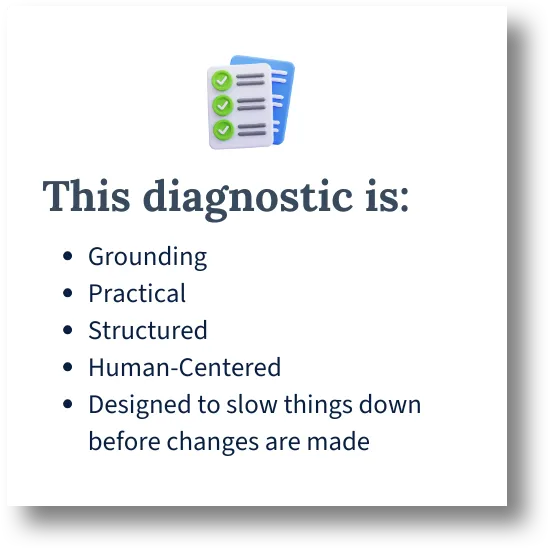
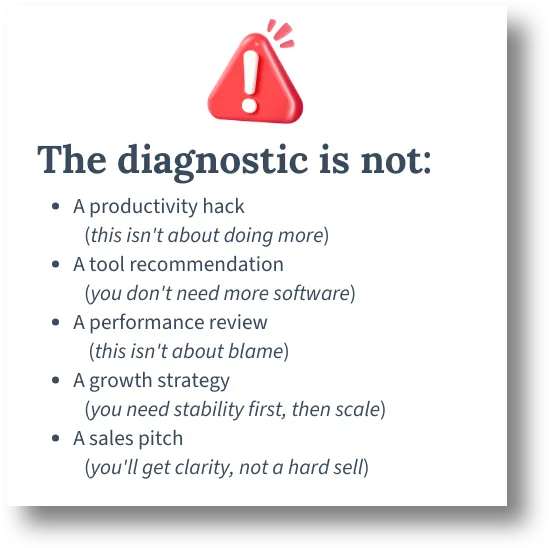
The goal isn't motivation. The goal is clarity.
Through a series of focused questions and reflections, you'll identify:
● Where your system depends on individual heroics
● Where critical knowledge is undocumented or trapped
● Where decisions stall or bottleneck
● Where leadership is over-functioning
● Where AI or automation would stabilize the system
● Where it would increase risk instead
Many leaders already feel these pressures. This diagnostic simply gives them a name.
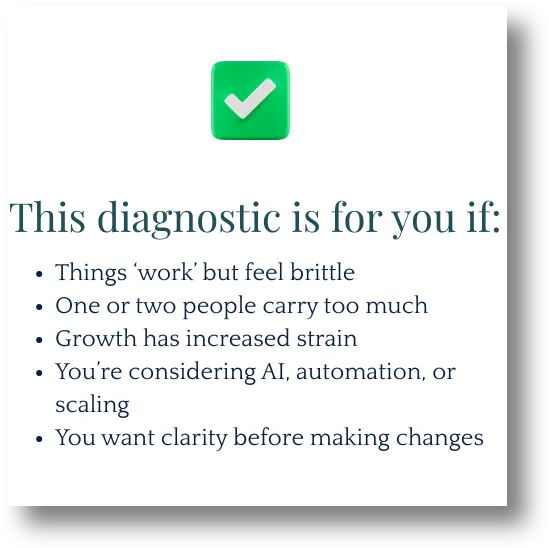
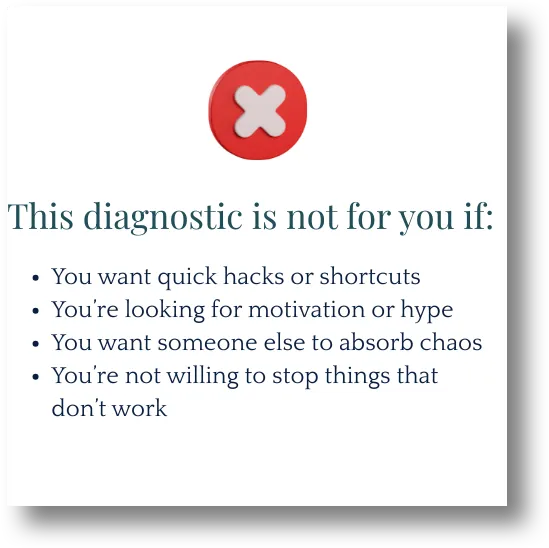
Clarity requires honesty. This experience assumes you're ready for that.
Ready to See Where Your System Is Compensating?
Most leaders already feel the strain. This diagnostic simply gives it a name - and a map.
Takes ~15-20 minutes. Designed to be thoughtful, not overwhelming.
This diagnostic was created by a Systems Stabilizer who works with leaders and organizations whose systems technically work - but rely too heavily on people, memory, or constant compensation.